1. What Is RAP?
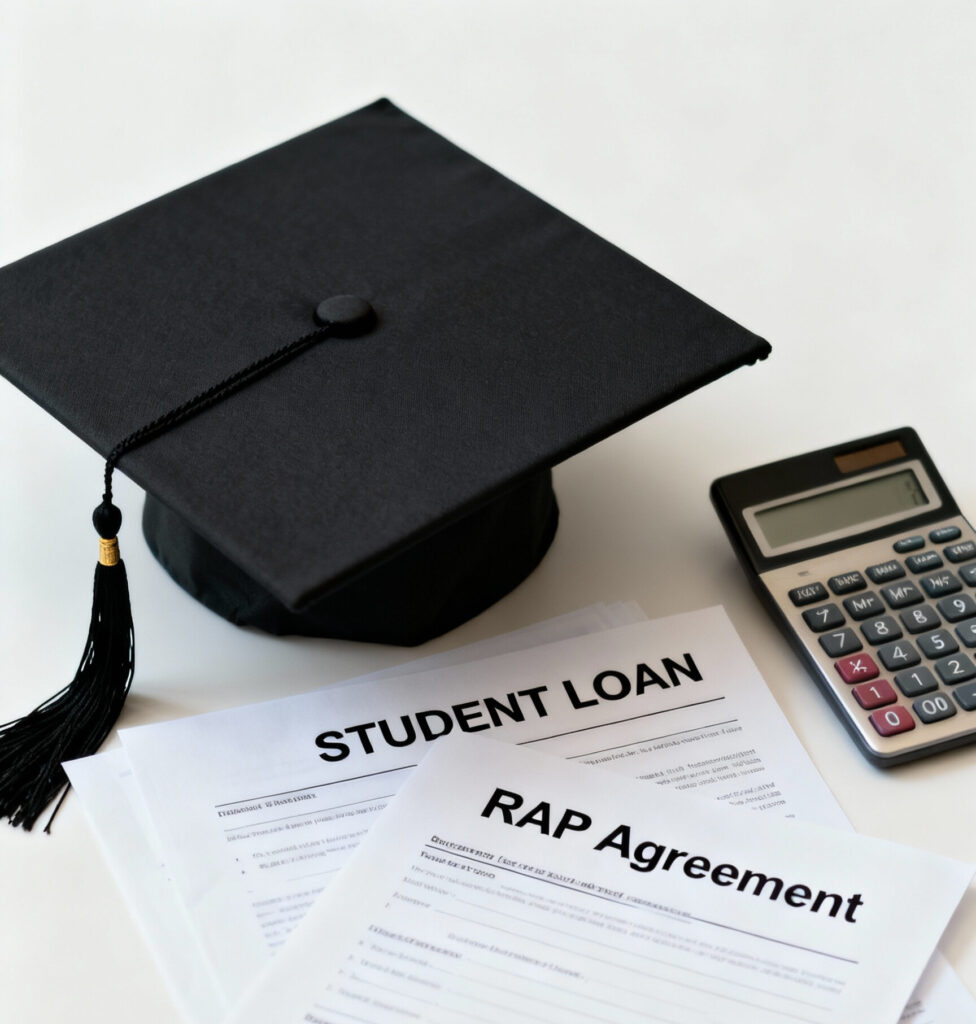
Starting July 1, 2026, the Repayment Assistance Plan (RAP) is the new—and only—income-driven repayment option for most new federal student loan borrowers in the U.S. Introduced by the One Big Beautiful Bill Act (OBBBA), RAP replaces popular prior plans like SAVE, PAYE, and IBR for anyone who takes out loans after this date.
Important: For most borrowers, RAP payments will be higher than previous plans.
2. How Does RAP Work?
- Monthly payments are based directly on your total Adjusted Gross Income (AGI)—not your “discretionary” income.
- Your payment increases by 1% for every additional $10,000 you earn between $10,000 and $100,000.
- Over $100,000: 10% of AGI (the maximum rate).
- You can subtract $50/month for each dependent claimed.
- No matter how little you earn, you must pay at least $10 each month (hard minimum).
Real Example: A borrower earning $50,000 pays about $208/month under RAP.
3. The Marriage Rule
RAP counts your spouse’s income even if you file taxes separately—a major difference from SAVE. Married borrowers will likely see significantly higher payments.
4. What’s Different From Old Plans?
- No protected income buffer: Under SAVE/IBR, a big share of your income was shielded from payment calculations. Under RAP, only the small $50/dependent deduction applies.
- Longer path to forgiveness: RAP requires paying for 30 years before any remaining loan balance is forgiven (old plans: 20–25 years).
- Interest protection: If your payment doesn’t cover the interest, the government subsidizes it—so your balance won’t grow from unpaid interest.
5. Real-World Impact
- For most, monthly payments are now much higher than under SAVE or PAYE, especially for those earning $40,000–$100,000.
- Even very low-earning borrowers ($10K or less) must pay $10 each month (no more $0 payments).
- Forgiven debt is taxable income—meaning a possible large tax bill after 30 years unless Congress changes the law.
6. Who Should Pay Attention?
- Anyone taking out federal student loans after July 1, 2026.
- Current borrowers: If you DON’T take new loans after this date, you can stay on SAVE/IBR until June 30, 2028.
- Public Service workers: PSLF still forgives your loan after 10 years of payments (not 30).
Key Takeaway
RAP will shape student loan repayment for a decade or more—higher payments for most, a longer path to freedom, and fewer chances for $0 bills. Plan ahead, estimate your new payment, and know the rules before you borrow.
For the complete breakdown, read our full guide: “Repayment Assistance Plan (RAP) Explained: The New Income-Driven Loan Repayment Your Future May Depend On.”