

Photo By Emiliano Vittoriosi
A Dropout’s Path to Becoming an AI Research Scientist
Gabriel Petersson never finished high school, yet today he sits among some of the brightest minds in artificial intelligence at OpenAI, contributing to the development of Sora—a project that typically requires years of doctoral-level education. His journey raises a compelling question: what if formal credentials are no longer the gatekeepers of expertise in the tech world?
In a recent appearance on the “Extraordinary” podcast, Petersson shared how he leveraged ChatGPT to bridge the gap between being a high school dropout and becoming a research scientist. His story challenges everything we thought we knew about the prerequisites for success in AI.
Learning by Doing: The Top-Down Approach
Petersson’s path wasn’t conventional. He left his Swedish high school back in 2019 to pursue an opportunity at a small startup. What he lacked in formal training, he made up for with necessity. “We had to build things,” he recalls. “We needed product recommendation systems, scraping tools, integrations.” There was no luxury of theoretical learning—the work demanded practical solutions.
This hands-on environment became his greatest teacher. Rather than studying concepts in isolation, he was solving real-world problems. That’s when he realized something important: people learn fastest when they start with an actual challenge and work backward to understand the foundational principles.
When it came time to master machine learning, Petersson applied this same philosophy. He didn’t crack open dense textbooks or enroll in courses. Instead, he turned to ChatGPT. His approach was methodical: ask the AI to suggest a project worth building, have it generate the code, encounter inevitable bugs, and then figure out the fixes together with the model’s assistance.
“You start with a problem, then you recursively go deeper,” he explained. By drilling into each component as needed, the underlying concepts naturally fell into place. What might have taken years of bottom-up learning through traditional education compressed into a focused, problem-driven journey.
The End of Educational Gatekeeping
What strikes many people about Petersson’s story is his perspective on knowledge itself. “Universities don’t really have a monopoly on foundational knowledge anymore,” he said during the podcast. “You can access any foundational knowledge through ChatGPT.”
This isn’t arrogance toward institutions—it’s an observation about how technology has democratized access to information. A teenager with an internet connection now has the same foundational resources as a graduate student, minus the credential.
Credentials Are Optional; Results Are Everything
Perhaps most provocatively, Petersson argues that the conversation around hiring needs to shift. “Companies just want results,” he says bluntly. “Show them you can code. Show them you can create value. If you can do that, they’ll hire you.”
His career arc supports this philosophy. Before joining OpenAI’s Sora team in December, he worked as a software engineer at Midjourney and Dataland. Each role was earned not through a diploma, but through demonstrated capability.
The Rise of the Dropout in Tech
Petersson’s success isn’t an isolated story. The tech industry is experiencing a genuine shift in how it values talent.
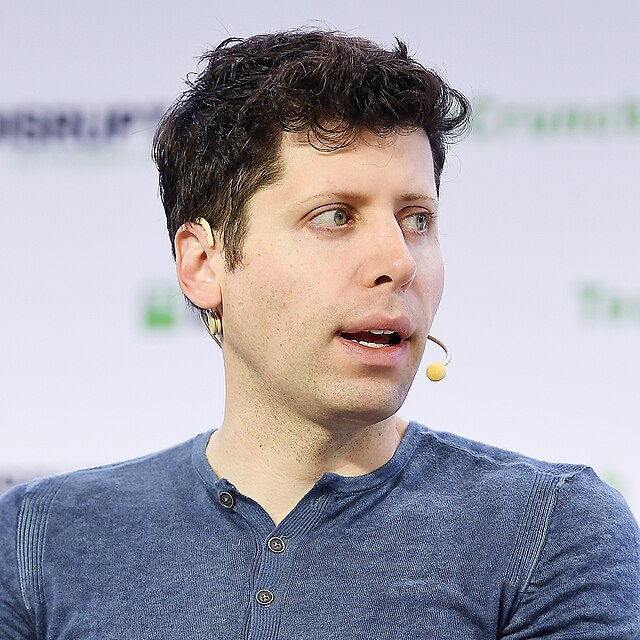
Sam Altman, OpenAI’s CEO and himself a Stanford dropout, captured the zeitgeist when he said he’s “envious of the current generation of 20-year-olds who are dropping out.” His reasoning? The landscape of opportunity is simply vast. “You can build so much, and the possibilities in this space are incredibly wide,” he noted during a DevDay conference appearance.
This sentiment has been validated by major players in venture capital. Andreessen Horowitz, one of Silicon Valley’s most influential firms, published research suggesting that younger founders and dropouts now have more chances than ever. “It’s the best time in a decade for people without degrees to launch companies,” their analysis indicated.
The conversation has grown even more provocative among some tech leaders. Alex Karp, the CEO of Palantir, stated on CNBC that traditional education had left him with an “intellectually incorrect” understanding of how the world operates. His company took this philosophy further by launching the Meritocracy Fellowship—a paid four-month internship specifically designed for high school graduates not attending college.
What This Means for the Future
Gabriel Petersson’s journey from high school dropout to OpenAI research scientist isn’t really about him—it’s about what his story reveals about where we’re headed. In a world where AI can accelerate learning, where real problems teach faster than classrooms, and where companies prioritize what you can do over who certified you, the traditional pathways to success look increasingly outdated.
The question isn’t whether you should drop out of high school. The question is whether the next generation even needs to wait for permission to start learning.