

Personally, I love this hustle, which can be your full-time professional business if you execute it right. I’m putting this business in the easy category because anyone can do it. It has $3,000 to $5,000 a month potential for sure, low difficulty, and you can get paid within 30 to 60 days. No degree needed. Just basic execution and learning how to actually talk to people.
Tired of misleading voices? Let’s discuss.
What is Short-Form Video Editing?
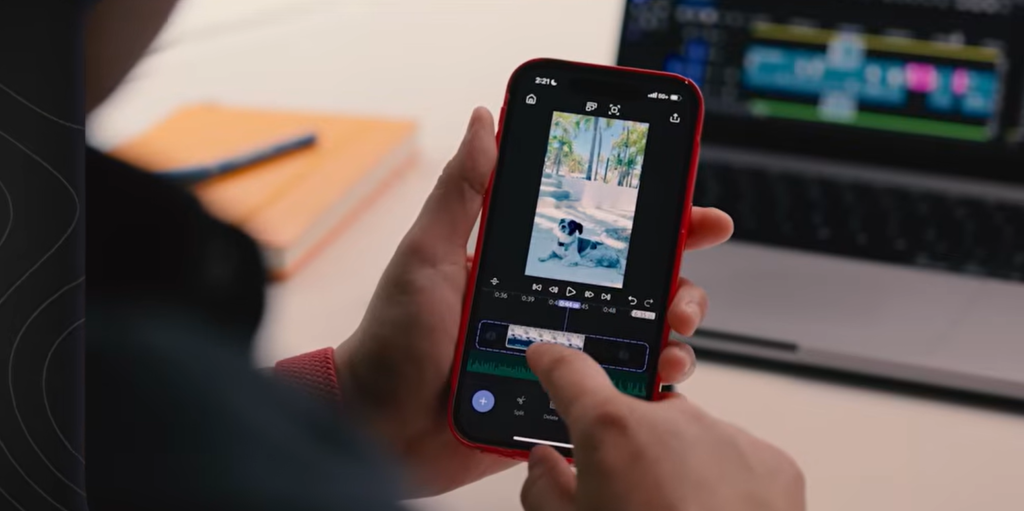
Short-form video editing is basically taking long videos—like podcasts, YouTube videos, webinars, or any content over 5-10 minutes—and chopping them up into bite-sized clips that are 15 to 60 seconds long. These clips are made specifically for platforms like TikTok, Instagram Reels, YouTube Shorts, and Twitter. The goal is to grab attention fast, deliver value or entertainment quickly, and hook people in the first few seconds. You’re not just randomly cutting clips though—you’re finding the best moments, adding captions so people can watch without sound, throwing in some zooms or transitions to keep it engaging, and making sure each clip can stand on its own. Think of it like being a highlight reel creator. You’re taking the gold from long content and packaging it so it actually gets watched and shared on social media.
Why Short-Form Editing is Perfect for Beginners
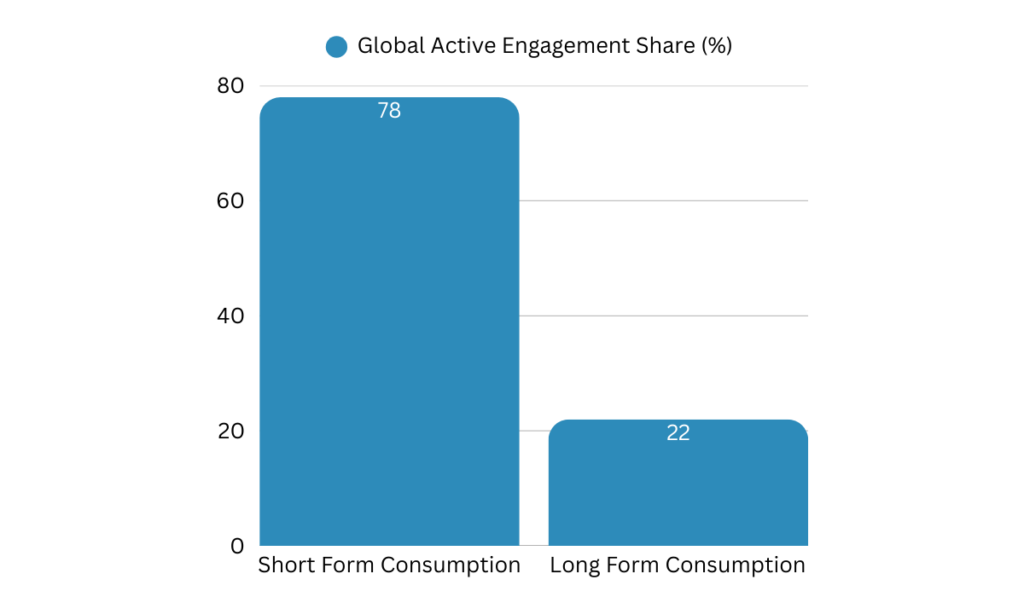
Consuming social media content, short-form content ranks at the top. We all scroll Shorts and Reels all day.
Here’s the deal: everyone and their mom is a content creator nowadays. Content creation is booming. TikTok, Instagram Reels, YouTube Shorts—the demand is insane. Content creators are focused on making content, and short-form videos are part of their distribution channel, so they need a basic video editing guy who can manage their short-form videos, edit their long-form content, and distribute it into short-form videos on different channels. They’re searching for that because they’re focused on creating content. For us, with AI tools making this stupid easy, you can start getting clients fast and build real skills while you’re at it. Let’s take a look at the stats.
Source: Data compiled and synthesized from Media.net, DataReportal (Digital 2026), HubSpot (2026 State of Marketing), Vidico/Firework, Sensor Tower, Ampere Analysis, EMARKETER, and Sprout Social.
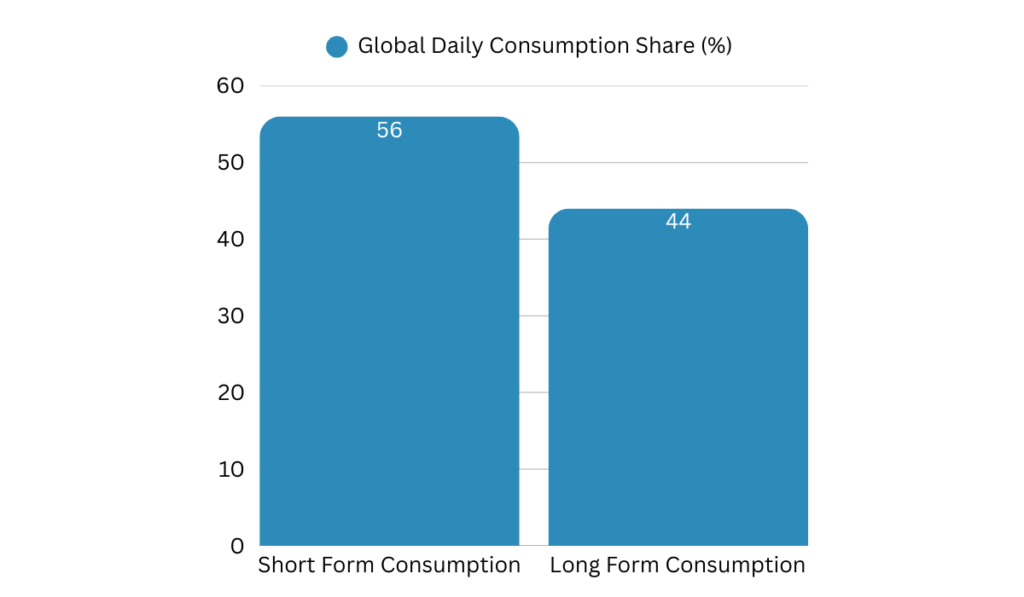
The above statistics show the potential of short-form content consumption at a global level, as it ranks higher in both active engagement and overall consumption.
This isn’t some get-rich-quick thing. It’s about getting your first win, building confidence, and understanding how clients actually work. Once you nail this, you’ve got momentum.
Now let’s discuss step-by-step execution:
Step 1: Learn Modern Short‑Form Basics (1–2 Weeks)
You don’t need to be a Hollywood editor. You need to understand short‑form psychology and a small, focused tool stack.
Pick one AI‑first workflow + one editor
Choose:
- One AI repurposing tool to auto‑clip and caption long videos (then you refine):
- Opus Clip, Vizard.ai, Joyspace, Klap, Quso/Vidyo, Vmaker, Canva’s long‑to‑short converter, etc.
- One main editor (NLE) for polishing and custom work:
- CapCut, DaVinci Resolve (free, pro‑grade), Adobe Premiere Pro or Premiere Rush.
Do not learn five tools at once. Pick one AI repurposer + one editor and go deep. I found these to be the best. Choose one according to your understanding. YouTube tutorial will guide you well.
What to practice daily (1–2 hours)
For 7–14 days, repeat this loop:
- Feed a long video (podcast, talking‑head, webinar) into your AI tool to generate 3–10 draft clips.
- Improve those drafts in your editor:
- Cut out dead air and filler words.
- Strengthen the hook in the first 1–3 seconds (text, jump‑cuts, zooms).
- Add clean, readable captions—critical because a large share of viewers scroll on mute.
- Do basic color and contrast tweaks so it pops on mobile feeds.
- Watch 25–50 viral Reels/Shorts/TikToks in your niche and analyze:
- Hook style, pacing, captions, and call‑to‑action.
Skills to actually master (not everything)
Focus on:
- Cutting for retention, not just trimming.
- Captions optimized for silent viewing (size, contrast, line breaks).
- Vertical formats: 9:16, 1080×1920 as a default.
- Using trending or on‑brand sounds when the platform allows.
Your goal: in 1–2 weeks, be able to take a 10–30 minute video and turn it into 5–7 clean, engaging clips that feel native on TikTok/Reels/Shorts.
Step 2: Build a Simple, Real Ethical Portfolio (Week 2–3)
Clients hire based on proof, not theory. They care about seeing clips that match their style and goals. You can build this even with zero clients.
Portfolio rule: Use content you own or have permission for
Best options:
- Record yourself (or friends) talking about topics you like. Don’t overthink it—I’m just giving you the option to record yourself. If you’re not comfortable, don’t worry; use other methods.
- Collaborate with 1–2 small creators or businesses who say “yes” to a free test.
- Use licensed/royalty‑free footage (Pexels, Pixabay, Storyblocks, client‑approved footage) for practice.
Avoid using random YouTubers’ videos without permission in anything public. It’s fine for private practice, but portfolio pieces should be original, licensed, or client‑approved to avoid rights issues. Ask small creators and share your clip with them; they will easily allow you
Three ways to build your first 5–10 clips
- Edit your own content if you are cool with that
- Record a 10–20 minute talking‑head video (tips, story, commentary).
- Use your AI tool to auto‑find 5–10 potential clips, then improve them manually.
- Post the best 7–10 clips on TikTok/Instagram/YouTube Shorts to start building public proof.
- Strategic free edits
- Find 2–3 small creators (5k–50k followers) in niches you like: business, fitness, food, coding, education, etc.
- DM something like:
“Hey [Name], I love your video on [specific topic]. I’m building a short‑form repurposing portfolio and would love to turn one of your episodes into 3–5 TikTok/Reels clips for free. If you like them, we can talk about a regular package. Interested?” Take references only. I suggest you write your own, because that will teach you how to talk and recognize your mistakes; it will improve you. - Overdeliver on quality. Ask permission to use the clips and their testimonial in your portfolio.
- Case‑study style portfolio hub (Notion or simple site)
High‑ticket clients now expect curated project “cards,” not a raw Drive folder. On a single Notion page or one‑page site, create 5–8 entries:- Embedded short video (hosted on unlisted YouTube or Loom).
- 2–3 lines: “Goal → What you did → Result” (e.g., “Turned a 40‑minute podcast into 15 clips; top clip hit 120k views, increased profile visits by 40%.”).
- Tools used (e.g., Joyspace + DaVinci Resolve).
- Testimonial screenshot if available.
A clean Notion portfolio with clear case studies is absolutely acceptable in 2026 and widely used by freelancers. Take a few-minute tutorial on YouTube on how to use Notion for a portfolio; it will take only 30 minutes to understand. Notion is also a great thing to learn.
Step 3: Get Your First Paying Clients (Week 3–6)
Once you have 5–10 solid examples, the game shifts from learning to client acquisition.
Go where people already say “I need an editor”
Instead of relying only on cold DMs, prioritize places with buying intent:
- Upwork / Fiverr / Contra / Similar platforms – Many listings specifically seek short‑form editors and repurposing specialists.
- LinkedIn – Founders, coaches, agencies, and B2B creators often post that they need help with content.
- Niche Discord / Slack communities – Podcast communities, creator servers, education/course groups.
- X (Twitter), Reddit, Facebook Groups – Still useful if you reply to specific posts or threads where someone mentions they need editing, rather than mass DM spam.
Marketers and founders in 2025–2026 report that untargeted cold DMs get low reply rates and risk bans, while contextual outreach to people already discussing the problem can achieve double‑digit response rates.
How to pitch (evidence‑based pattern)
Instead of a long “I help X do Y” speech, keep it short and specific:
- Engage publicly first – Comment meaningfully on a recent episode or thread.
- Send a short, contextual message, for example:
“Hey [Name], loved your episode on [specific topic]. I noticed you’re posting longer videos but not many short clips on [TikTok/Reels/Shorts]. Short‑form is driving a lot of discovery in 2025–26.
I specialize in turning one long video into 10–20 platform‑native clips using AI + manual editing. Here are 2 short examples similar to your style: [portfolio link].
If you’d like, I can turn one of your recent episodes into 3 sample clips so you can see what’s possible. Want me to do that?” - If they’re interested, clarify:
- Platforms that matter most (TikTok vs Reels vs Shorts).
- Main goal (leads, channel growth, authority).
- Ideal posting frequency.
This matches how top creators and editors describe successful outreach in 2025–2026 interviews and threads. Once you become knowledgeable in your skills, you will gain natural confidence and know what to say without framing anything. Just learn how to be cleaner and better at communicating. Keep trying until you find your first opportunity. You will find more, and faster, because you have a skill set now.
Pricing that matches 2026 data (no fake numbers)
Recent 2026 rate guides show:
- Typical short‑form/social clips (15–60 seconds) priced in the ~100–500 USD/project or per‑clip range, depending on complexity and editor level.
- Hourly ranges:
- Entry: roughly 20–35 USD/hour.
- Mid‑level: 40–80 USD/hour.
- Senior/specialist: 100–150+ USD/hour.
For a beginner with a decent portfolio targeting Western/international clients:
- First 1–3 clients (portfolio‑building pricing):
- 3–5 clips: around 150–300 USD total.
- Once you’ve delivered ~20–30 clips with good feedback:
- 10‑clip package: around 500–1,000 USD, depending on complexity and add‑ons (thumbnails, multiple aspect ratios, analytics review).
Intermediate rates (after 50+ clips and consistent results):
- 150–300+ USD per high‑quality, strategy‑driven clip, or 1,000–3,000 USD/month retainers for recurring content calendars
Now you understand the whole pricing model and plan, and this is just the beginning of your business. After becoming an advanced editor, your reputation grows and your income also grows.
These ranges line up with current market data, Fiverr/Upwork listings, and editor case studies—not inflated promises.
Step 4: Deliver Like a Pro and Keep Clients (Ongoing)
AI can output “okay” clips; clients keep humans who make them feel understood, save time, and grow their results.
Communication (your unfair advantage)
- Reply within 24 hours on weekdays.
- Before starting, confirm:
- Platforms and formats (Reels, Shorts, TikTok, maybe 1:1 cuts for LinkedIn).
- Brand guidelines (colors, fonts, on‑screen style).
- Posting cadence and expectations (e.g., “We’ll aim for 20 clips/month from 4 source videos.”).
- Send simple status updates:
- “Clipped 12 moments from Episode 14; refining the best 8 now; delivery Friday.”
Hiring guides and client interviews consistently mention responsive communication and clarity as top reasons they stay with an editor and pay higher rates. To become top at your work, you have to learn daily; you will create a big reputable agency.
Delivery checklist
For each batch:
- Vertical 1080×1920 files (.mp4) optimized for TikTok, Reels, Shorts.
- Clean, readable captions that work even on mute.
- On‑brand colors and simple motion (subtle zooms, punch‑in on key lines).
- File naming that makes sense: ClientName_Ep12_Clip03_HookKeyword.mp4.
- A simple doc/Notion page listing:
- Hook line.
- Platform suggestion.
- Optional suggested caption text and hashtags.
Fast, respectful revisions and occasional small “extras” (such as one bonus clip or alternative hook version) are common in high‑retention editor workflows.
Smart overdelivery (without burnout)
Occasionally:
- Add 1 bonus clip from the same source video.
- Suggest a different hook variant for a strong clip.
- Share basic performance notes once you have data (e.g., “clips under 25s are getting higher completion; let’s prioritize that”).
This is where you shift from “editor” to “content partner,” which is much harder for AI tools alone to replace.
Step 5: Grow to Serious Income (Month 2–6+)
Here is where we remove hype and separate typical outcomes from documented but higher‑effort case studies.
What is realistic for most beginners?
Based on current roadmaps and programs teaching editors:
- Multiple creators and educators describe 0 → first $1,000/month in roughly 60–90 days as realistic for committed beginners who follow a clear process.
- They emphasize:
- Focused learning (not random tutorials).
- A real portfolio.
- Consistent outreach and follow‑up.
So for someone starting from scratch and working seriously:
- Month 1: Learn tools, build portfolio, maybe land first small paid job. Common range: 0–1,000 USD.
- Months 2–3: 2–5 recurring clients on modest packages; common range: about 1,000–3,000 USD/month with consistent, smart work.
- Beyond Month 3+:
- 5,000–10,000 USD/month becomes possible when you:
- Specialize in a profitable niche (SaaS, coaches, finance, etc.).
- Raise rates into the 150–400+ USD/clip or 1,500–5,000 USD/month retainer range.
- Potentially bring on subcontractors or turn into a micro‑agency.
- 5,000–10,000 USD/month becomes possible when you:
Treat 5–10k/month by month three as a stretch outcome, not the default. These numbers are supported by multiple creators and rate guides, not “overnight” fantasies.
There are real case studies of editors hitting 5,000+ USD/month
- A Fiverr creator reported 5,900 USD from video editing in their first 30 days, but they already had a strong account history and used a very specific positioning and upsell system.
- Several educators and editors show how they reached 5,000 USD+/month editing for big YouTube channels or multiple retainers, usually by becoming specialists and focusing heavily on outreach, positioning, and systems.
However, even these people stress:
- It required high volume, strategic outreach (often dozens to hundreds of tailored messages).
- They usually niched down (e.g., one type of client, like big YouTubers, high‑ticket coaches, or UGC for brands).
- They developed strong skills and repeatable systems first, not after.
- 5,000+ USD/month is possible for a solo short‑form editor in 2026, but:
- It almost always takes more than a few months unless you already have skills or audience leverage.
- It requires clarity on niche + high‑value offer + intense, consistent outreach + solid systems, not casual effort.
- 10,000+ USD/month is generally associated with higher‑level operations (teams, agency setups, or extremely strong positioning and demand).
You should remove any implication that $5k–$10k is normal or easy in 90 days for a complete beginner. Present it explicitly as a long‑term, high‑execution goal.
How to scale without hype
Realistic growth levers:
- Gradual price increases
- After ~20–30 solid clips and a few happy clients, edge your per‑clip/retainer prices upward; this matches how most editors move from entry‑level to mid‑level rates.
- Niche specialization
- Become “the repurposing editor for [podcasters / SaaS founders / fitness coaches / finance creators],” which nearly every successful case study mentions as a key to higher retainers.
- Systemize and use AI properly
- Use AI tools (Opus, Joyspace, Vmaker, Klap, Canva, etc.) to generate rough clips fast, then focus your time on hooks, storytelling, and brand.
- Possibly build a micro‑team
- Some editors who reach 8k–10k+/month do so by outsourcing parts of the workflow (sub‑editors, thumbnail designers) and shifting into a small agency model.
Common 2026 Mistakes and Honest Alternatives
Avoid:
- Selling only “basic clip & captions” as your unique offer; AI already does this cheaply and fast.
- Expecting $5k–$10k/month in 1–2 months from a standing start; that is not typical and only happens in rare, high‑execution cases with strong leverage.
- Mass‑spamming identical DMs across platforms; creators and platforms actively push back against this now.
Do instead:
- Position as a strategy‑driven repurposing partner who uses AI as leverage and focuses on content that actually performs.
- Anchor expectations realistically: aim for first $500–$1,000 as proof of concept, then build toward $2k–$3k/month within a few months of consistent effort, and treat 5k+ as a serious, long‑term goal that requires a clear plan and heavy execution.
- Keep improving skills, communication, and systems every month, not just chasing new tools.
Your Action Plan (Start This Week)
First step
- Choose:
- 1 AI repurposing tool (e.g., Opus Clip, Joyspace, Vmaker, Klap, Canva AI).
- 1 main editor (CapCut, DaVinci Resolve, or Premiere Rush).
- Watch 3–5 up‑to‑date YouTube tutorials specifically on short‑form workflows in your chosen tools.
Second step-
- Take one long video (your own or from a collaborator) and:
- Generate 5–10 AI draft clips.
- Manually refine at least 5 of them for hooks, captions, and pacing.
- Build a simple Notion portfolio page and upload your best 5 clips with short descriptions.
Third step-
- Improve presentation:
- Better thumbnails or cover frames.
- Clear titles on your portfolio like “Podcast → 15 Clips in 2 Days” or “Coach → 20 Reels From 1 Webinar.”
Fourth step
- Reach out to 10–20 potential clients:
- 5–10 warm leads via job boards / platforms (Upwork/Fiverr/Contra).
- 5–10 highly personalized DMs or emails to creators whose content you genuinely follow, referencing specific videos and offering 1 free sample.
Repeat the weekly cycle: improve skills → strengthen portfolio → send more targeted pitches → raise prices as you gain proof.
I’m sure if you are in the video genre and editing excites you, this business is perfect for you; it will give you a new career and a well-established business profile. Be consistent with your work with clear actions.