

The Unconventional Path
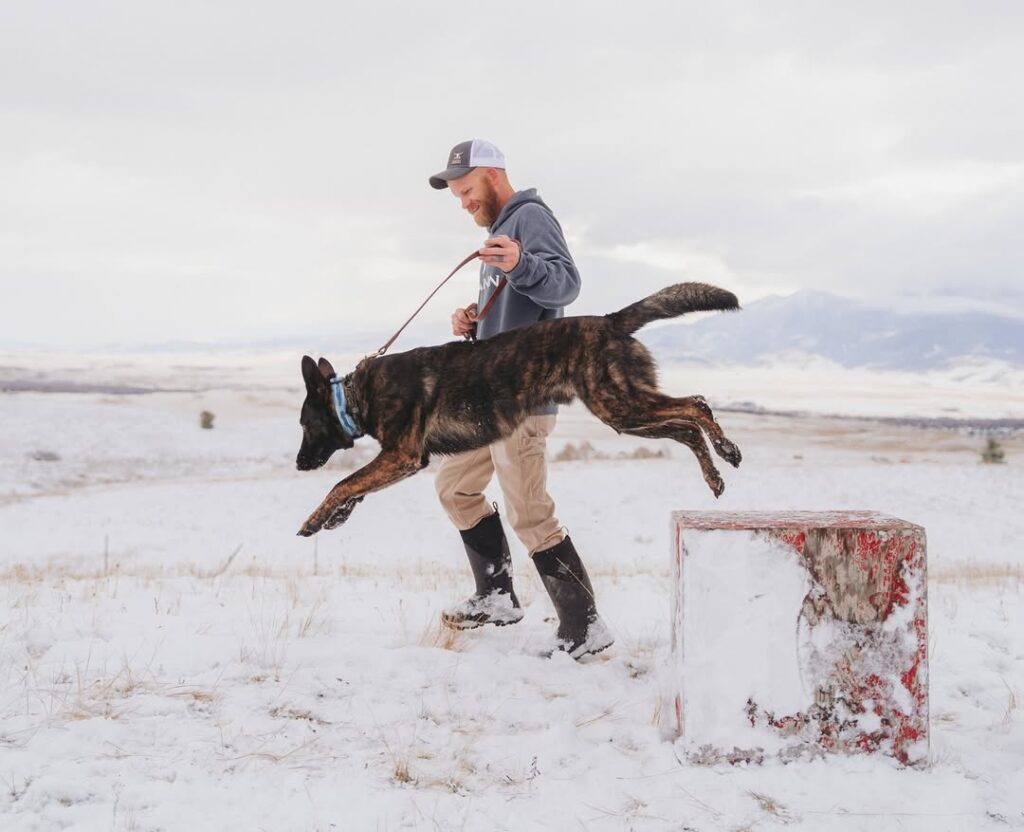
Kim Greene didn’t start with a business plan for luxury protection dogs. She started with a problem: How do you stay safe in Nairobi while pregnant, without a firearm or bodyguard?
Her solution? A Dutch Shepherd mix named Banshee.
That one dog became the foundation of Svalinn—a company that now sells protection dogs for $175,000 each and brought in $2.97 million in 2024.
Here’s what matters for you: Kim’s success wasn’t about being a dog training expert. It was about recognizing a need, solving it authentically, and building systems around something she loved.
This case study focuses on execution and systems; readers interested in Kim Greene’s personal journey and mindset shifts can explore her full success story separately.
This case study documents what actually happened in Kim Greene’s journey, then analyzes how the same business model could be executed faster today under specific conditions.
If you’re an animal lover thinking, “Could I build a business around this?” the answer is yes. Here’s how.
What Actually Happened: Kim’s 8-Year Path to Profitability
The facts from Kim Greene’s journey:
- 2005: Started Ridgeback Ltd. in Nairobi, Kenya—security consulting mixed with protection dog services
- 2005-2013: Struggled financially (“broke as a joke”), learned dog training through trial and error, sent employees to U.S. for training
- 2013: Moved entire operation to the U.S. (Wyoming, then Montana)—relocated 30 dogs, secured new licenses, rebranded to Svalinn
- 2015: Focused exclusively on protection dogs, hired budget-focused employee
- 2017: Became profitable for the first time (12 years after launch, 4 years after U.S. restart)
- 2024: $2.97 million in revenue, sustainable profitability
What slowed her down:
- Wrong initial market (Kenya vs. U.S. wealthy clientele)
- Unfocused business model (security consulting + dogs)
- Learning dog training from scratch instead of hiring experts
- Complete geographic restart requiring infrastructure rebuild
- No financial systems until year 10
- Bootstrapped growth with minimal capital
Key insight: Kim didn’t take 8 years because the business model requires 8 years. She took 8 years because she was pioneering the model while simultaneously learning, relocating, and bootstrapping.
Why Your Timeline Can Be Different
You have advantages Kim didn’t:
- Proven model – Svalinn’s success demonstrates market demand and validates the $175K price point
- Established market – Wealthy buyers in Montana, Wyoming, Colorado, Idaho already know this product exists
- Available expertise – Professional protection dog trainers can be hired immediately
- Clear positioning – The “Bred to love. Trained to protect” framework is proven effective
- Access to capital – Agricultural loans and investors now understand this business model
- Kim’s roadmap – You know what works and what doesn’t
The biological constant: Dog development still requires 18-24 months. This cannot be shortened. Everything else—location, hiring, branding, capitalization—can be accelerated.
The Realistic Timeline: 18-24 Months to Profitability (Under the Right Conditions)
What actually takes time:
| Activity | Kim’s Timeline | Your Timeline (If Capitalized) |
|---|---|---|
| Learning dog training | 8+ years (trial & error) | 0 months (hire certified trainers) |
| Finding optimal location | 8 years (Kenya → Wyoming → Montana) | 3-6 months (targeted research) |
| Building professional brand | 2-4 years (gradual investment) | 6-12 months (immediate investment) |
| Dog development cycle | ~2 years per dog | 18-24 months per dog (biological) |
| Reaching profitability | 12 years total | 18-24 months (with capital & execution) |
The core difference: With sufficient capital and smart execution, you can compress everything except the dog development timeline itself.
This assumes: You have $300K-$500K in capital, you hire experienced trainers, you execute well on location and branding, and you reach your target market effectively. These aren’t small assumptions.
Two Strategic Approaches
Path A: The Bootstrap Route ($50K-$100K Start)
Realistic timeline: 30-36 months to profitability
Start small, grow organically, reinvest profits.
- Months 1-6: Get certified, acquire 3-5 puppies, lease small property
- Months 7-18: Raise and train first batch while building brand
- Months 19-24: Sell first 2-3 dogs ($350K-$525K revenue)
- Months 25-36: Reinvest in more dogs, staff, marketing. Reach profitability.
Pros: Lower risk, maintain control, prove concept yourself Cons: Slower growth, limited capacity, requires significant personal dog training involvement
Path B: The Capitalized Launch ($300K-$500K Start)
Realistic timeline: 18-24 months to profitability
Start with investment, hire immediately, scale faster.
- Months 1-3: Secure property, hire 2-3 professional trainers, acquire 15-20 puppies, launch brand professionally
- Months 4-18: Trainers handle dog development, you handle sales/marketing/operations
- Months 12-18: Sell first batch (8-10 dogs = $1.4M-$1.75M revenue)
- Months 19-24: Reach profitability with second batch selling, reinvest for scale
Pros: Professional from day one, higher capacity, faster to market Cons: Higher financial risk, requires significant capital access, pressure to execute well
Why Path B makes sense for most aspiring operators: This business requires meaningful investment regardless (property, animals, facilities). If you’re not a professional trainer, you’re building a brand and system, not becoming the trainer yourself.
The Capitalized Launch: A Detailed Execution Plan
Since most people reading this won’t be certified dog trainers, here’s how to execute the capitalized approach.
Core principle: You’re the operator and brand builder. Expert trainers handle the dogs.
Month 1-3: Foundation ($300K-$500K Investment)
Week 1-2: Secure Funding
- Agricultural loan: Farm Credit or FSA loan ($200K-$350K for land, facilities, animals)
- Angel investor: $150K-$200K for operations, marketing, working capital (typically 20-30% equity)
- Personal capital: $50K-$100K minimum to demonstrate commitment
Where to find investors:
- Agricultural investment networks (FarmFundr, AgFunder)
- High-net-worth individuals in your target market (Montana, Wyoming, Idaho—potential future customers)
- Family offices interested in lifestyle businesses
Week 3-4: Secure Location
- Lease with option to buy: 50-100 acres in Montana, Wyoming, Idaho, or rural Colorado
- Target areas: Near Bozeman, Jackson Hole, Sun Valley, Aspen, Park City (proximity to wealth)
- Must have: Barn/training facilities or budget to build ($50K-$100K)
- Typical cost: $2K-$5K monthly lease or $500K-$1M purchase
Week 5-8: Hire Core Team
- Head Trainer ($60K-$80K/year): Certified protection dog trainer, 5+ years experience
- Assistant Trainer ($40K-$50K/year): Mix of backgrounds (following Kim’s diversity approach)
- Operations Manager (Part-time or $50K/year): Budget, logistics, client management
Where to find trainers:
- Protection dog training schools (recent graduates)
- Established facilities (yes, recruit experienced talent)
- Military/police K9 handlers transitioning to civilian work
- Professional networks: IACP, Working Dog Forum, K9 Pro
Week 9-12: Acquire Dogs & Setup
- Purchase 15-20 puppies ($2K-$5K each = $30K-$100K total)
- Breeds: Dutch Shepherd mix, Belgian Malinois, German Shepherd (Svalinn uses these)
- Source: Reputable breeders specializing in working line dogs (Europe or U.S.)
- Setup facilities: Kennels, training equipment, veterinary partnership
- Insurance: Liability ($5K-$10K/year), animal mortality, property
End of Month 3 total investment: $350K-$500K
Month 4-6: Brand Launch (While Dogs Develop)
Your focus shifts to business while trainers work with dogs.
- Hire branding agency ($15K-$30K): Logo, website, positioning, tagline
- Professional photography/video ($10K-$20K): Property, dogs in training, lifestyle content
- Website launch ($5K-$10K): Premium design, inquiry system, waitlist capture
- PR campaign ($10K-$20K): Luxury lifestyle publications, local media, wealth management circles
- Social media foundation: Instagram, Facebook, YouTube—document the journey authentically
Your positioning framework: “[Your Brand Name]: Elite Protection Dogs for Modern Families. Raised in the [Region] Wilderness. Bred to Love. Trained to Protect.”
Monthly burn rate: $25K-$35K (staff, property, dog care, marketing)
Month 7-12: Sales Pipeline Development
Dogs are 7-12 months old—not ready to sell, but you’re building your buyer list.
- Host ranch tours: Invite 20-30 qualified prospects (typically net worth $5M+) to see the facility
- Attend luxury events: Sponsor or attend events in Jackson Hole, Aspen, Bozeman, Sun Valley
- Build partnerships: Wealth managers, family offices, luxury real estate agents, private security consultants
- Content marketing: Blog posts, video series on dog development, educational content
- Waitlist goal: 15-20 interested buyers before first dogs are ready to sell
How to identify potential buyers:
- Luxury real estate agents in target markets (they know recent $5M+ property buyers)
- Private wealth management firms serving high-net-worth families
- Family office conferences and networks
- Private aviation companies (clientele matches your target market)
- Exclusive membership clubs (private golf, ski resorts)
- Public records of luxury home purchases (direct outreach)
Monthly burn rate: $25K-$35K
Month 13-18: First Sales
Dogs are 18-24 months old and ready for placement.
- Sell first batch: Target 8-10 dogs at $175K each = $1.4M-$1.75M revenue
- Personal delivery: You or head trainer personally delivers each dog, trains family for 3 days on-site
- 45-day follow-up: Return visit to ensure smooth integration, build relationship, request referrals
- Acquire next batch: Use initial revenue to purchase 15-20 more puppies immediately
Financial snapshot at month 18:
- Revenue: $1.4M-$1.75M
- Total costs to date: $800K-$1.2M (initial investment + 18 months operating expenses)
- Net position: $200K-$550K (approaching breakeven or slight profit)
Month 19-24: Path to Profitability
Second batch ready. Systems proven. Brand established. Referrals beginning.
- Sell second batch: Another 8-10 dogs = $1.4M-$1.75M revenue
- Marketing efficiency: Referrals and waitlist reduce customer acquisition costs
- Operational optimization: Training systems refined, less waste, smoother processes
- Capacity decision: Expand to 20-30 dogs on property or maintain boutique model
24-month financial summary:
- Total revenue: $2.8M-$3.5M
- Total costs: $1.5M-$2M (investment + 24 months operations)
- Net profit: $800K-$1.5M over two years
- Business status: Profitable and sustainable
This timeline assumes: Strong execution, successful sales to target market, no major operational issues, and dogs that meet quality standards. Real-world results will vary based on these factors.
Why This Can Work Faster Than Kim’s Journey
1. You’re Managing, Not Learning
Kim had to learn dog training herself. You hire certified experts on day one. Your role: sales, brand, operations, client relationships.
2. You’re Executing, Not Pivoting
Kim spent 8 years mixing security consulting with dogs. You launch with singular focus on the proven model.
3. You’re Launching Right, Not Relocating
Kim moved from Kenya to Wyoming to Montana over 8 years. You research once, choose strategically, execute in place.
4. You’re Capitalized, Not Bootstrapping
Kim was “broke as a joke” for years. You start with $300K-$500K and operate professionally from day one.
5. You’re Replicating, Not Inventing
Kim created this model through trial and error. You’re following a proven $3M business with clear unit economics.
The key difference: Kim pioneered. You’re executing a validated model with better information and resources.
Capital Requirements: Be Realistic
Minimum viable investment: $300K
- $150K: Land lease (1 year) + facility setup
- $50K: Dogs (15 puppies)
- $50K: Staff salaries (6 months runway)
- $25K: Branding, website, initial marketing
- $25K: Operating capital, insurance, contingency
Strong launch investment: $500K
- $300K: Land purchase or 2-year lease + facilities
- $75K: Dogs (20 puppies)
- $75K: Staff salaries (full year)
- $30K: Professional branding and marketing campaign
- $20K: Contingency and growth capital
Capital sources:
- Personal savings/assets: $50K-$100K minimum (demonstrates commitment to investors/lenders)
- Agricultural loan: $150K-$250K (lower interest rates, land/equipment as collateral)
- Angel investor: $100K-$200K (expect to offer 20-30% equity)
If you can’t access $300K in capital, this specific business isn’t viable right now. Consider building capital through a smaller animal-related business first, then scaling into this model.
Critical Recommendation: Get Certified Alongside Building
Even though you’re hiring expert trainers, pursue certification yourself while running the business.
This isn’t about becoming the trainer—you’ve already hired for that. This is about:
- Deepening your expertise so you can quality-control your team’s work
- Building credibility with discerning clients who want to meet the owner
- Understanding nuances that separate good training from exceptional training
- Future-proofing if you expand into other animal services or consulting
Recommended certifications (choose based on your interest):
For dog-focused businesses:
- IACP (International Association of Canine Professionals) – Professional dog trainer certification
- CCPDT (Certification Council for Professional Dog Trainers) – Behavior and training credentials
If you’re interested in expanding to horses:
- PATH International – Equine therapy and instruction certification
If exotic animals interest you:
- NAIA (National Animal Interest Alliance) – Exotic animal handling and care
For livestock guardian dogs or ranch security:
- State agricultural extension programs – Livestock management and guardian dog training
How to pursue this while operating:
- Most certifications offer online or part-time study options
- Study during your first 12 months while dogs are developing
- Attend in-person intensives during slower operational periods
- Use your facility and dogs for required practical training hours
- Target completion by end of Year 2
The credibility payoff: When a high-net-worth client asks about your background, you can say: “I built this business by hiring the best trainers in the country, and I’m IACP-certified myself to ensure we maintain the highest standards.”
That combination of business leadership and technical credibility is powerful.
The Realistic Requirements: Not a Side Hustle
This business demands:
- $300K-$500K upfront capital access
- 18-24 months before significant revenue
- Full-time commitment (or hiring a full-time operator)
- High-touch, personal client relationships
- Geographic commitment (cannot be operated remotely)
- Comfort with livestock/agricultural business realities
If you have those capabilities, the path is clear:
Year 1: Invest capital → Build facility → Hire trainers → Raise dogs → Build brand → Develop sales pipeline
Year 2: Sell first batch → Reach profitability → Scale capacity → Build waitlist for ongoing sales
Year 3+: $2M-$5M annual revenue potential with 30-40% profit margins
Your Immediate Next Steps (If You’re Serious)
This Week:
- Calculate your actual capital access: Savings + realistic loan capacity + potential investor connections. Can you reach $300K?
- Research target locations: Spend 10+ hours looking at properties in Montana, Wyoming, Idaho, Colorado. What’s realistically available?
- Talk to 3 protection dog trainers: Call and ask what it would take to hire them full-time. What are their expectations?
This Month:
- Visit Svalinn or a competitor: Book a ranch tour. See the actual operation. Ask detailed questions.
- Build a financial model: Map out revenue (X dogs × $175K), costs (property, staff, dogs, marketing), timeline to profitability
- Identify 5 potential investors: Who in your network has capital and might align with this vision?
This Quarter:
- Secure funding commitment: Either investor interest or loan pre-approval—something concrete
- Choose your location: Make the actual decision on where you’ll operate
- Write your business plan: 15-page document covering model, financials, timeline, team structure
By Month 6:
- Execute or walk away: Either you’ve launched (property secured, team hired, dogs acquired) or you’ve decided this isn’t your path
There’s no middle ground. This business requires full commitment.
Why You Can Actually Do This in 2 Years
Kim Greene proved the model works. Svalinn is real, profitable, and sustainable at the $175K price point.
You’re executing with better conditions:
- More information (her story, competitor analysis, market validation)
- Established market (wealthy clientele in American West familiar with this product)
- Available expertise (hire experienced trainers rather than learning yourself)
- Access to capital (agricultural loans and investors who understand the model)
- Geographic clarity (you know where to locate from day one)
The core question isn’t “Can this work?” Kim already proved it works.
The real question is: “Am I willing and able to commit what this requires?”
If yes—if you have the capital, the commitment, and the ability to execute well—you’re looking at a $2M-$3M business by Year 3.
If no, that’s perfectly fine. There are many other animal-based businesses with lower barriers to entry. Build something smaller first.
But don’t confuse Kim’s 8-year pioneering timeline with what’s required to replicate a proven model today. She was inventing. You’re executing.
That’s a fundamental difference.
Your action today: Calculate your available capital. If it’s under $300K, map out how to get there. If it’s above $300K, call a protection dog trainer and ask what it would take to hire them.
The 24-month clock starts when you commit, not when you’re ready.