

There is no magic. These 5 methods are genuine and widely practiced. Those who learn, understand, and take consistent action are the ones who see results. You also need to grasp them fully and keep taking action, and you will achieve results just like everyone else. Learn and act.
AI has leveled the playing field for beginners, turning simple prompts into revenue streams that top $10K–$80K per month. These five ideas, pulled from real-world examples like YouTube channels with 20M+ views and TikTok videos driving $21K in sales, use free trials and low-cost tools to get you started fast.
Overview: The 5 Best Beginner AI Businesses
Here are the five AI business ideas, all launchable with minimal upfront costs using accessible platforms and tools.
- AI language lesson podcasts (YouTube channel)
- UGC‑style AI influencers (TikTok / TikTok Shop / dropshipping)
- Niche AI‑assisted romance and genre novels (Amazon KDP)
- AI‑powered print‑on‑demand stores (Etsy, Amazon, etc.)
- “Choose One” AI video channels (TikTok, YouTube Shorts, Reels)
1. AI Language Lesson Podcast Channel
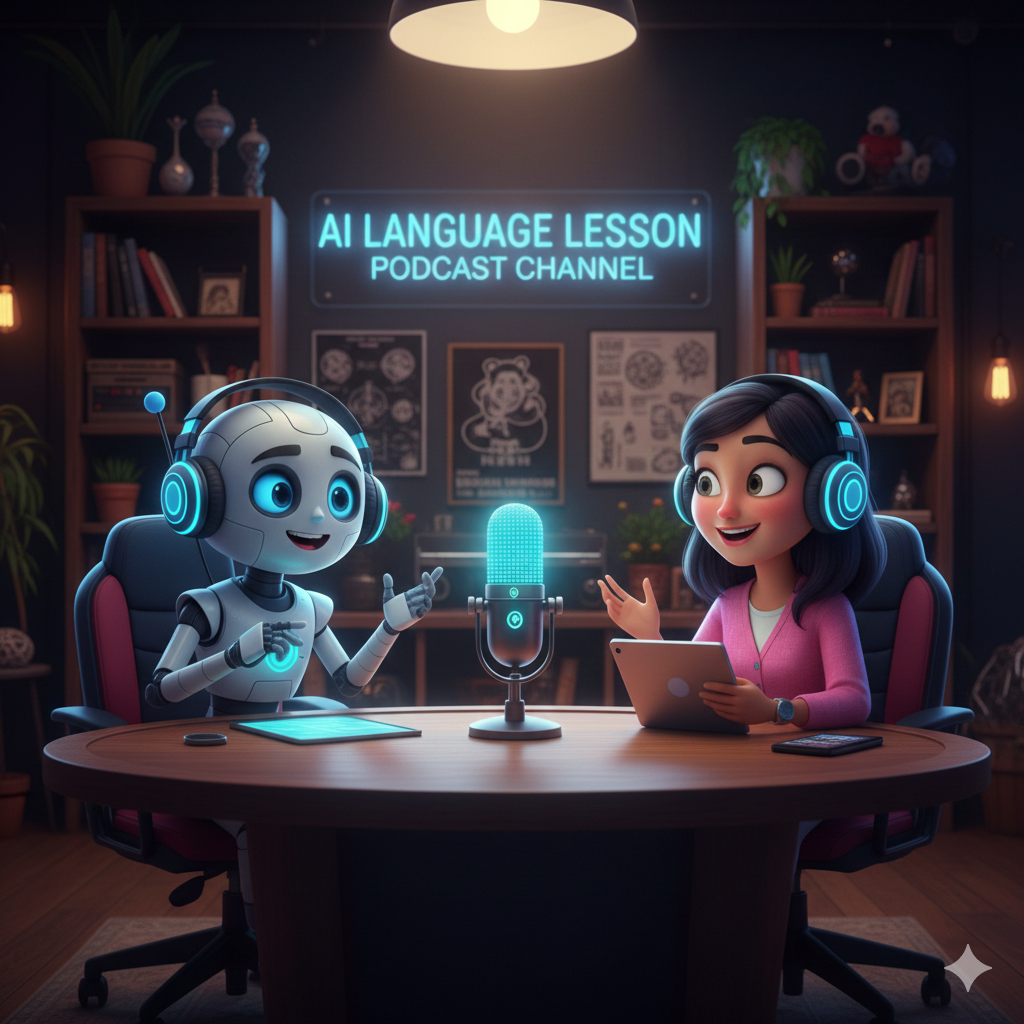
Creators are building English‑learning and language channels on YouTube that publish AI‑generated podcast lessons, reaching millions of views and tens of thousands of dollars per month.
One channel in the English niche hit over 2.7 million views on a single podcast video in two months and now drives more than 4 million monthly views, with overall long‑form views above 20 million. With typical YouTube payouts of about $3–$8 per 1,000 views, that kind of volume can translate into roughly $32,000 per month in ad revenue.
The first and most important step: You need to consistently upload videos, learn from your competitors, and patiently grow your YouTube channel. 99% of people fail because they don’t really know what they’re doing — they just run blindly and end up going in the wrong direction. That’s why you need clarity, knowledge, and a strategy: learn from your competitors and build your channel where AI can do more than half the work for you — all you need is to choose the right direction.
Step‑by‑step workflow
- Pick your niche and lesson format
- Focus on conversational English, exam prep (IELTS, TOEFL), or everyday phrases for travelers.
- Decide on a “podcast” style: two hosts talking, teacher–student format, or solo narrator.
- Generate the podcast script (Wondercraft studio)
- Go to Wondercraft Studio and create a new script in “convo mode.”
- Prompt Wondercraft with: what your podcast is about, who the hosts are, target learner level (beginner/intermediate), and episode length.
- Let Wondercraft draft a chatty, back‑and‑forth script, then manually tweak phrasing, examples, and explanations to make it clearer for learners.
- Create AI host voices and final audio
- In Wondercraft, select host voices that match your brand (e.g., friendly American English female + calm British English male).
- Generate the full episode; review for mispronunciations or awkward sentences and fix them in the script.
- Export the finished audio file (MP3/WAV).
- Generate a podcast cover or host image
- Use Nano Banana Pro, the image model inside Google’s Gemini Pro, currently available with a 30‑day free trial.
- Prompt it with the style you want: “Two friendly podcast hosts sitting in a studio, colorful, YouTube‑ready thumbnail.”
- Iterate by telling it what to change (colors, outfits, background) until the visual fits your branding.
- Turn audio into a YouTube video with captions
- Use a simple editor; Clipchamp (free with a Microsoft account) is enough for podcasts under 30 minutes.
- Create a new video project, drop your audio on the timeline, and add the static host image.
- Extend the image to cover the full audio length.
- Use Clipchamp’s AI captions tool to auto‑generate subtitles, then lightly edit them for accuracy.
- Export the video and upload to YouTube with SEO‑rich titles, descriptions, and language‑learning keywords.
Tools and rough costs
- Wondercraft Creator plan: with a 50% off link, you can get 1,000 credits and produce roughly 5 episodes for about $2.50 per episode in AI voice cost.
- Nano Banana Pro (via Gemini Pro): free 30‑day trial.
- Clipchamp: free for basic videos under 30 minutes.
- Total realistic per‑episode cost: about $2.50 plus your time, with thumbnails and editing essentially free on trials and free tiers.
2. UGC‑Style AI Influencer Videos for TikTok and Dropshipping
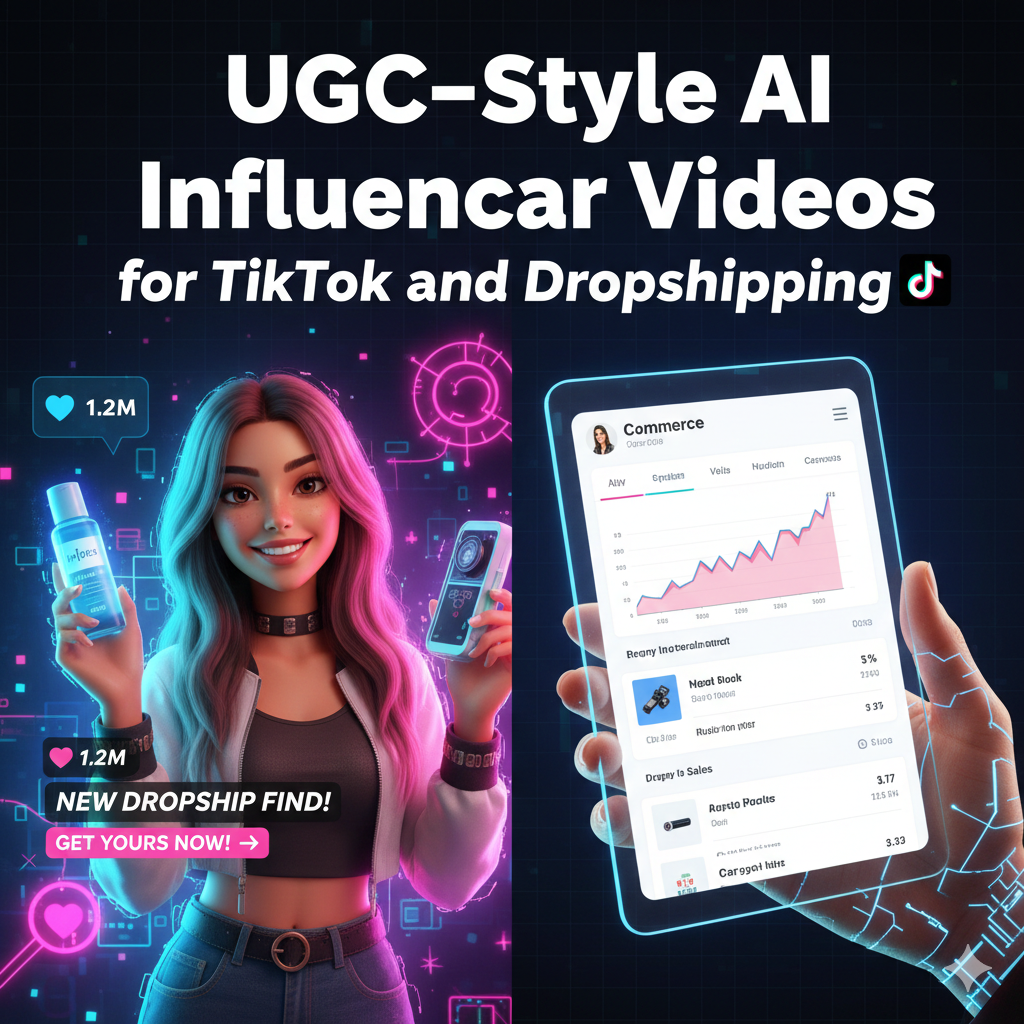
AI “UGC influencer” accounts generate short, product‑focused videos that look like user‑generated content but are fully AI animated, driving sales via TikTok Shop or Shopify dropshipping.
One Christmas‑themed account, less than two weeks old, had a single bow video that TikTok Shop data estimated at over $9,000 in sales, and another viral video from the same account an estimated $12,000, totaling more than $21,000 in under two weeks.
The first and most important step: First, don’t just create an account and try to sell a product. Before selling anything, you need to post interesting content, build your reach, and establish a niche-specific identity that people enjoy. Choose any niche, create content around it, learn from competitors in the same niche, and focus on increasing your watch time and followers, because this is the primary and most important action for success.
Step‑by‑step workflow (TikTok Shop affiliate path)
- Find winning products
- Browse TikTok Shop and AliExpress for items with strong existing UGC and views (seasonal gifts, gadgets, home décor).
- Focus on products with clear visual benefits that look great in short videos.
- Create AI influencer images (Nano Banana Pro)
- Grab a supplier image of a model using the product as a reference.
- Upload that image into Nano Banana Pro so it understands the product’s size and context.
- Ask it to create a new scene where an AI influencer is holding or demonstrating the product in a lifestyle setting.
- Animate the image into a short video
- Use Google VEO3 (included in Gemini Pro) to animate: upload the image, describe the motion (e.g., “The model smiles and shows the giant Christmas bow on the door, subtle camera movement”), and generate.
- If you are in Europe where VEO3 isn’t yet available due to regulation, use Kling: upload the same image, give an animation prompt, and let it generate a short clip.
- Add overlays, captions, and call‑to‑action
- Use a simple editor (CapCut, Clipchamp, or mobile editors) to add text overlays like “You Need This for Your Christmas Door” and clear call‑to‑action arrows pointing to the TikTok Shop link.
- Include short benefit lines and urgency (limited stock, seasonal).
- Monetize
- Path A: TikTok Shop affiliate
- Requirements: at least 1,000 followers and residence in an eligible country (USA and a set of other approved regions).
- Join TikTok Shop as an affiliate and link products directly in your videos; earn commissions on each sale.
- Path B: Shopify dropshipping
- If you don’t qualify for TikTok Shop, build your own store and use your AI UGC account to push traffic to your website.
- Path A: TikTok Shop affiliate
Step‑by‑step workflow (Shopify dropshipping with AI)
- Build the store with Build Your Store AI
- Use the AI‑powered builder “Build Your Store AI,” which can set up a Shopify dropshipping store for about $2 in under 10 minutes.
- Follow the on‑screen questions; it will configure theme, pages, and product structure for you.
- Connect Shopify trial and pricing
- Activate Shopify’s free 3‑day trial, after which it currently runs at about $1 per month for three months on the introductory offer.
- Automate fulfillment with AutoDS
- Use AutoDS, an AI‑powered dropshipping app integrated via Build Your Store AI.
- They run a $0.99 first‑month promo: AutoDS automatically places orders with suppliers like AliExpress when a customer buys from your store.
- Choose products and pricing
- Example: a popular Bluetooth record player from AliExpress, delivered to the US in 1–2 weeks, sells around $21.
- List it at a higher price on your store, keep the margin as profit while AutoDS orders and ships for you.
Tools and rough costs
- Nano Banana Pro (Gemini Pro): free 30‑day trial.
- VEO3 video generator: included in Gemini Pro; roughly a few video generations per day on Pro, higher limits on Ultra.
- Kling: about $6.99 for 990 credits, equating to roughly 19 videos at around $0.37 per video (with referral bonuses).
- Build Your Store AI: about $2 one‑time setup for a store.
- Shopify: 3‑day free trial, then about $1 per month for three months under current promo.
- AutoDS: $0.99 for the first month via the promotion in the workflow.
3. Niche AI‑Assisted Romance and Genre Novels (Amazon KDP)
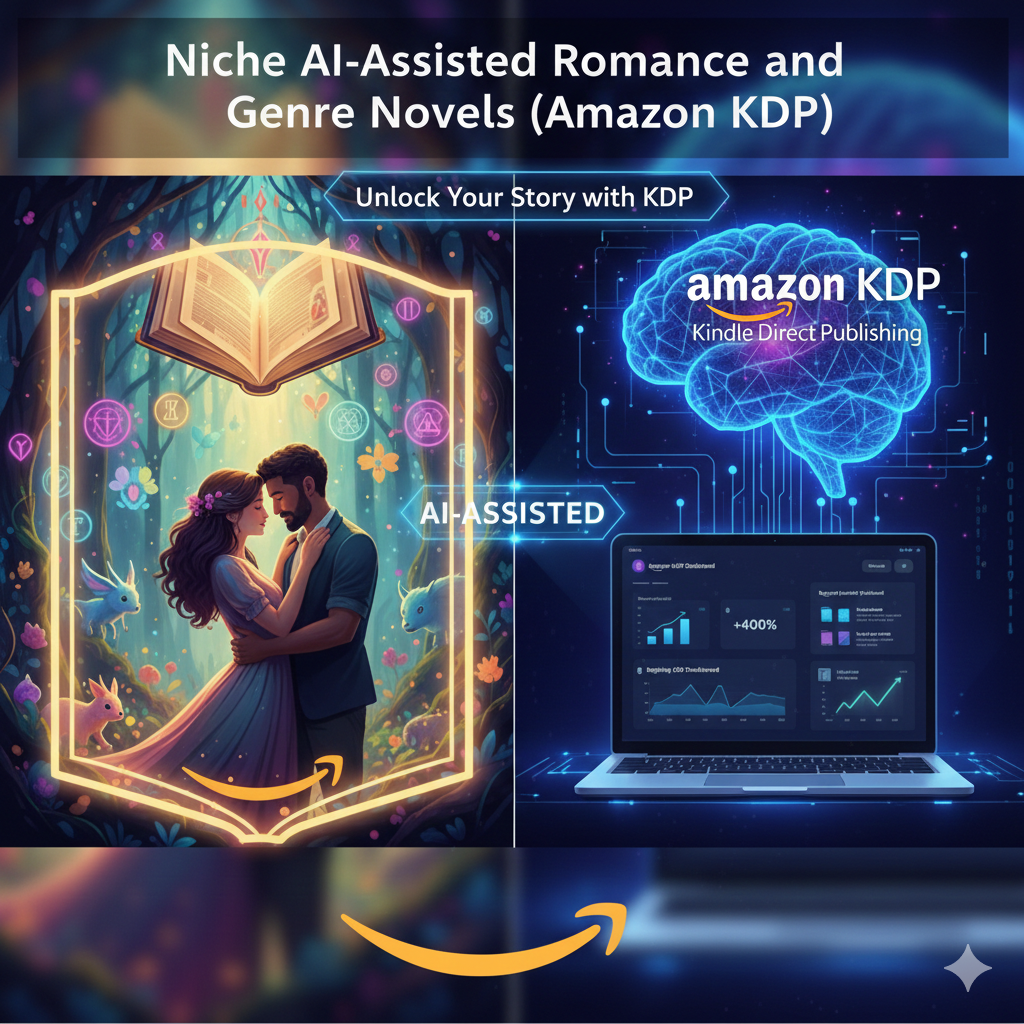
AI now makes it realistic for solo creators to publish highly niche novels that serve micro‑audiences, such as sports‑based romances, without spending months writing by hand.
The audio highlights a hockey‑themed romance ebook on Amazon Kindle that, based on its bestseller rank and an estimator, is selling roughly 298–375 copies per day. With an estimated royalty of about $4.63 per ebook via KDP’s calculator, that implies around $1,379 to $1,736 in daily earnings for a niche novel that targets a specific sub‑genre.
The first and most important step: The same applies to any business. You need to take action at your own level and learn how your competitors are working and how you will approach it yourself, because in this business the most important things are your niche, your product, and your visibility.
Step‑by‑step workflow
- Research niche opportunities (Perplexity)
- Use Perplexity’s free deep research (3 searches per day) to explore sub‑genres: “ice hockey romance,” “single dad firefighter romance,” “cosy witch mysteries,” etc.
- Identify reader complaints and underserved themes to target with a fresh angle.
- Plan the novel with Claude
- Use Claude as your primary writing assistant; it is tuned to be more emotionally aware and is strong at dialogue and character‑driven scenes.
- Ask Claude to sketch the outline (acts, major beats, character arcs) and then expand section by section into detailed scenes.
- Draft chapters using AI + human editing
- Let Claude draft chapters based on your outline, then edit them heavily in your own voice.
- Use it for brainstorming plot twists and emotional payoff moments as you go.
- Format for Kindle
- Export the manuscript to a docx or compatible format.
- Use Amazon’s free Kindle Create software to convert the file into a Kindle‑optimized format with chapters, table of contents, and correct styling.
- Design a compelling book cover
- Use Nano Banana Pro (Gemini) to generate cover concepts based on genre conventions, e.g., “moody ice rink background, silhouetted couple, modern typography.”
- Iterate to align with typical Amazon category covers, then finalize in a design tool if needed.
- Publish on KDP
- Use Amazon KDP (free to publish) to upload the Kindle file and cover.
- Set pricing to fit genre norms and royalty settings; KDP handles payments per sale.
Tools and rough costs
- Perplexity: 3 free deep‑research queries per day.
- Claude: depends on plan; basic access can be low‑cost or free depending on tier, used here as a writing copilot.
- Kindle Create: free.
- Nano Banana Pro: free 30‑day trial for cover creation.
- Publishing: no upfront fee with KDP; you pay nothing until you sell books.
4. AI‑Powered Print‑on‑Demand Store
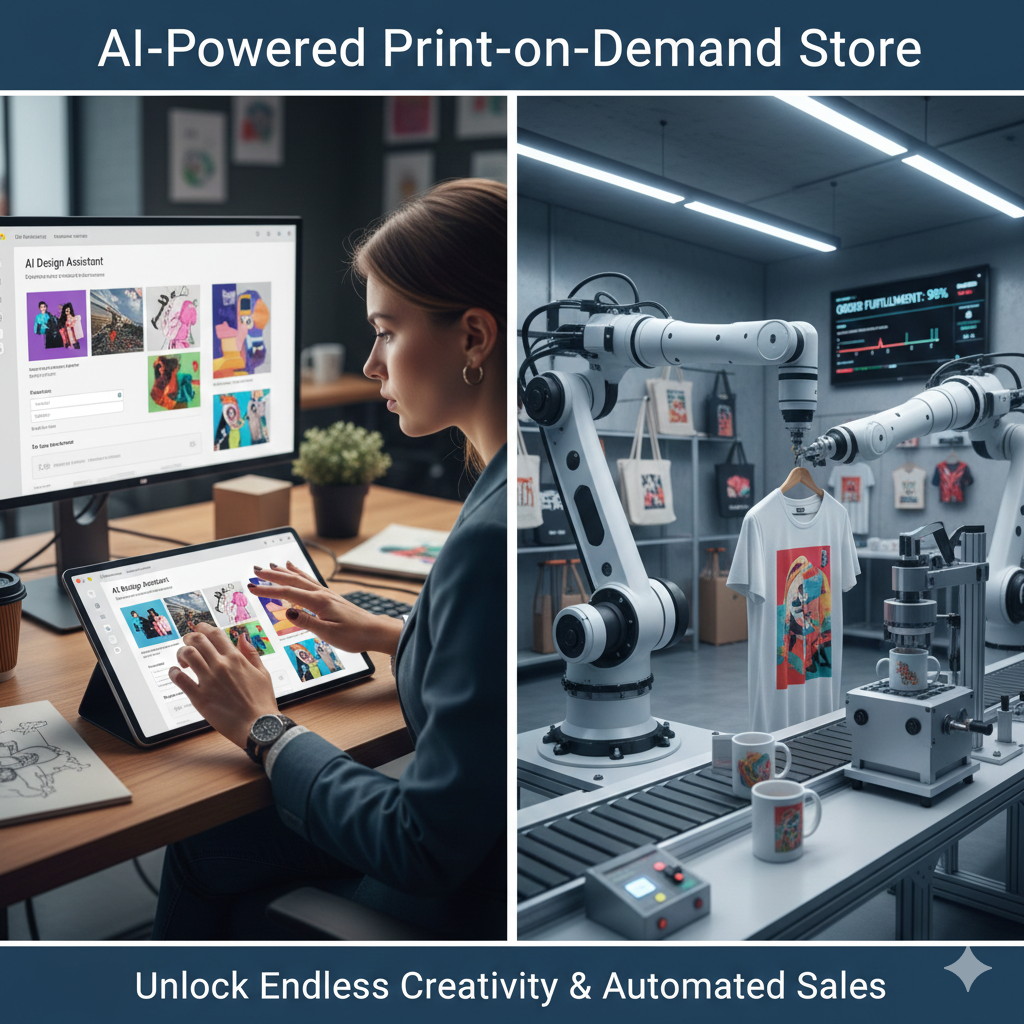
Print‑on‑demand (POD) remains one of the most proven AI‑friendly businesses because AI handles trend discovery, concept generation, and artwork creation, while POD apps manage production and shipping.
In the audio, a trending T‑shirt sold over 5,000 units in one month; at typical T‑shirt pricing, that translates to roughly $84,000 to $101,000 in monthly sales for a single design tied to a “67” TikTok meme. Other niche meme shirts, like sports or Christmas variants, also hit thousands of monthly sales.
The first and most important step: This business is actually much easier than many others, and AI can handle most of the work for us. Yet, many people still fail to succeed in this business for one simple reason: they don’t know how and where to sell. To sell, you must create visibility for your products — and this is the most important step. You need to drive organic traffic from different platforms, and if you have a budget, you should also use paid advertising to generate sales. Learn from and study your competitors, and the rest will become clear to you as you go through this article.
Step‑by‑step workflow
- Identify hot trends
- Use Etsy and Amazon to search for currently trending designs (e.g., meme numbers, slogans, seasonal jokes).
- Look for listings with 1,000+ recent sales and strong review velocity.
- Brainstorm new angles with ChatGPT
- Upload screenshots of high‑performing designs.
- Ask ChatGPT to suggest new niches and variations in the same style (e.g., converting a sports meme design into a teacher, nurse, or Christmas variant).
- Generate artwork with Nano Banana Pro
- Upload trend screenshots to Nano Banana Pro so it understands layout, style, and composition.
- Prompt it with your new concept, ensuring you avoid copying exact text or protected design elements.
- Iterate until the design fits the style but is clearly a new, original piece.
- Prepare print‑ready files in Canva Pro
- Use Canva Pro for AI‑assisted editing; a 30‑day free trial is available for Pro.
- Import the Nano Banana design, remove the background using AI background remover, then upscale it with the AI image upscaler to ensure high resolution for printing.
- Export as a high‑resolution PNG with a transparent background.
- Publish products via Printify / Printful
- Connect to POD apps like Printify or Printful, which provide blank products and printing/shipping.
- Upload your design to T‑shirts, hoodies, mugs, or wall art and sync them to Etsy, Amazon, or eBay using built‑in integrations.
- Set your margins above base cost; when a customer orders, the POD app prints and ships while you keep the difference as profit.
- Drive traffic with AI‑assisted marketing
- Use tools like Perplexity, ChatGPT, and Claude to plan content, SEO keywords, and organic promotion strategies.
- The creator offers a free print‑on‑demand ebook and a premium course (“Ecom Clubhouse”) explaining deeper tactics using these AI tools.
Tools and rough costs
- Trend research (Etsy/Amazon browsing): free.
- ChatGPT: cost depends on plan; you can often get started on free or low‑cost tiers.
- Nano Banana Pro (Gemini Pro): free 30‑day trial.
- Canva Pro: free 30‑day trial, then paid monthly.
- Printify / Printful: free to start; you pay production cost after each sale from your revenue.
5. “Choose One” AI Video Channels

“Choose one” videos are one‑minute compilations of AI‑generated clips around a theme (like bizarre beards or crazy staircases) where viewers comment on which option they prefer, boosting engagement and virality.
A single TikTok “choose one” video mentioned in the audio amassed over 100 million views in about a month. With TikTok Creative Rewards currently paying around 0.15 to 1 dollar per 1,000 views, that could mean roughly 15,000 to 100,000 dollars in revenue from one strongly performing video. Another YouTube video using the same format hit more than 9 million views in a month, indicating strong cross‑platform potential.
Step‑by‑step workflow
- Pick your theme
- Choose visually striking categories: futuristic staircases, fantasy haircuts, surreal bedrooms, sci‑fi cars, etc.
- Check TikTok for existing “choose one” trends to see what’s working now.
- Generate ideas with ChatGPT
- Ask ChatGPT for 10–20 imaginative options within your theme.
- Example: “Give me 20 unique staircase concepts that look impossible but beautiful.”
- Create images with Nano Banana Pro
- For each idea, prompt Nano Banana Pro to generate a detailed image.
- Refine prompts until the images are eye‑catching and varied.
- Animate with VEO3 or Kling
- Use VEO3 from the Gemini dashboard to turn each static image into a short animated clip, describing motion and camera movement.
- If VEO3 is unavailable in your region, use Kling with similar prompts.
- Edit into a “choose one” montage
- Combine clips into a one‑minute video in a basic editor.
- Add overlay text such as “Choose Your Staircase: 1, 2, 3, or 4?” and instruct viewers to comment their choice.
- Ensure the final runtime is at least one minute to qualify for TikTok’s monetization rules.
- Monetize on TikTok and YouTube
- TikTok Creative Rewards: you must meet follower and region requirements, and only videos over one minute are eligible.
- YouTube: similar content can perform well; once you are in the YouTube Partner Program, these compilations can generate ad revenue, plus Super Thanks and other features.
Tools and rough costs
- ChatGPT (idea generation): low or no cost depending on plan.
- Nano Banana Pro: free 30‑day access via Gemini Pro.
- VEO3 / Kling: limited free usage via Gemini, or low‑cost credit system on Kling (about 0.37 dollars per video with current promotion).
- Basic video editing tools (CapCut, Clipchamp): free tiers are sufficient.
Final Note: Choosing Your First AI Business
All five models share the same pattern: leverage AI to compress content creation time, use platforms with built‑in traffic (YouTube, TikTok, Amazon, Etsy), and keep fixed costs low by relying on free trials and pay‑as‑you‑go tools.
As a beginner, start with the model that matches your strengths—teaching (language podcasts), storytelling (novels), design (POD), short‑form content (UGC, “choose one” videos)—and commit to publishing consistently for at least 60–90 days before judging results.