

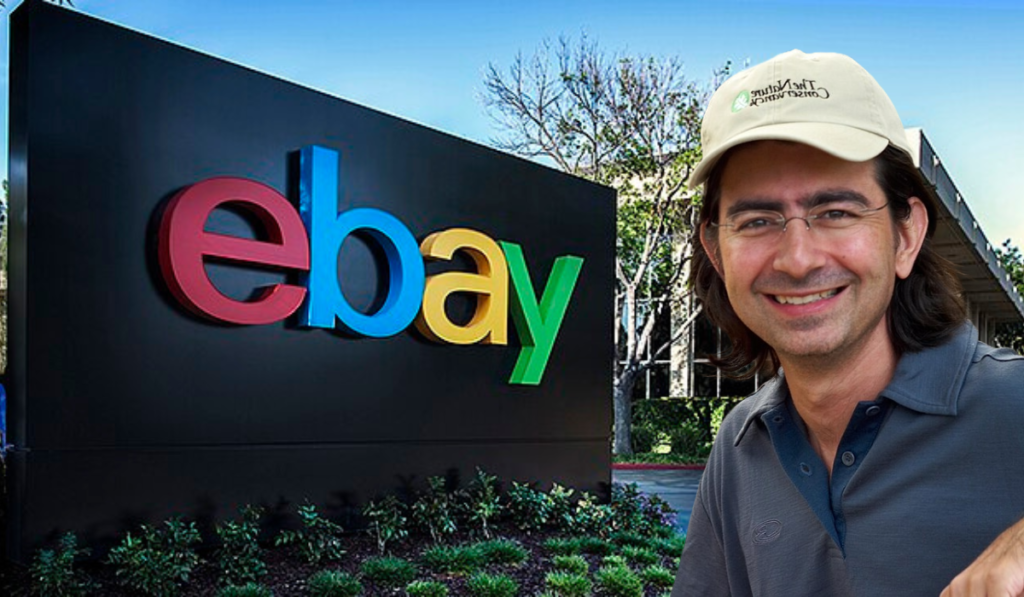

Let me tell you about the most important broken thing ever sold on the internet.
The world’s most famous broken laser pointer sold for $14.83 in 1995, and the buyer collected broken laser pointers. When Pierre Omidyar discovered this, he must have thought he’d stumbled onto something either completely absurd or completely brilliant. It turned out to be both. That bizarre transaction taught him something the rest of us were still years away from understanding: there’s a buyer for everything, somewhere in the world. You just need to connect them.
Here’s where the story gets interesting — and a little embarrassing for eBay.
For years, the world believed eBay was born from love — specifically, Pierre Omidyar’s desire to help his fiancée trade PEZ candy dispensers with other collectors. It’s the kind of origin myth that makes you believe in serendipity and romance and the magic of Silicon Valley all at once.
There’s just one problem: it never happened.
The PEZ story was invented in 1997 by eBay’s first PR manager, Mary Lou Song, who needed a newsworthy hook for journalists. It worked beautifully. Pam Omidyar did collect PEZ dispensers, and she had mentioned the difficulty of finding fellow enthusiasts in Silicon Valley. So the lie had just enough truth to feel authentic. But that wasn’t why Pierre built AuctionWeb — the original name of what became eBay. He approved the narrative anyway, and the company “lived the myth” for years, even posing CEO Meg Whitman with PEZ dispensers and filling the lobby with displays.
When the truth emerged in 2002, there must have been some red faces in the PR department. But the truth revealed something more interesting than the myth: Omidyar had built his platform from a genuine belief that person-to-person auctions could unlock unprecedented economic possibilities online. Not for love, not for candy — for an idea about how the internet could democratize commerce itself.
From Parisian Birth to Silicon Valley Vision
Born in Paris in 1967 to Iranian parents — his mother a linguist, his father a surgeon — Pierre Morad Omidyar moved to the United States at age six when his father took a position at Johns Hopkins. By fourteen, he was writing his first program: library catalog software for his Maryland school. The detail tells you everything about young Pierre — he saw a problem and immediately thought to code a solution.
After earning a computer science degree from Tufts in 1988, he worked for Apple subsidiary Claris, then co-founded Ink Development Corp in 1991, which pivoted into e-commerce as eShop Inc. When Microsoft acquired eShop in 1996, Omidyar saw firsthand how online retail could scale. He was watching the future unfold in real-time.
That same year, while working at General Magic, he had been thinking deeply about what the internet could enable that traditional markets couldn’t. His experience building eShop had shown him the potential of online commerce, but he believed fixed-price retail was only scratching the surface.
Auctions fascinated him because they solved a fundamental problem: price discovery. How do you value something rare, unique, or highly subjective? A vintage collectible, a handmade item, something with no established market? In physical auctions, geography limited who could participate. Online, anyone anywhere could bid, letting true market value emerge naturally. Omidyar saw auctions as the perfect mechanism for connecting ultra-niche supply and demand across the vastness of the internet — a way to create markets where none existed before.
That same year, while working at General Magic, he spent a Labor Day weekend coding a simple auction site on his personal webpage — sandwiched between unrelated content that famously included information about the Ebola virus. AuctionWeb launched in September 1995 as a pure experiment with no business plan and zero venture capital. Just a weekend project to test an idea.
The broken laser pointer sale was his lightbulb moment. But the real genius came next: the feedback system.
The Innovation That Changed Everything

The auctions weren’t the revolution. The trust system was.
Consider what Omidyar was asking people to do: strangers sending money and goods across the country to other strangers. In 1995, before Amazon had become a household name, before anyone really trusted putting their credit card online. The entire concept should have collapsed under the weight of fraud and suspicion.
Omidyar created a public reputation mechanism where buyers and sellers rated each transaction, building trust scores visible to everyone. It sounds simple now, but at the time it was radical. Academic studies later confirmed this simple social innovation dramatically reduced fraud and enabled person-to-person commerce at scale. It became the blueprint for Amazon Marketplace, Airbnb, Uber, and countless platforms built on stranger-to-stranger transactions.
Every time you check a driver’s rating or read restaurant reviews, you’re experiencing Omidyar’s insight: reputation is currency in digital markets.
Initially free, AuctionWeb started charging small listing fees when server costs exploded. Users kept coming anyway. Within nine months, Omidyar’s site income exceeded his General Magic salary, so he quit to run it full-time. By late 1996, the platform had hosted 250,000 auctions. By January 1997: 2 million. The growth was exponential, unstoppable. The name “eBay” itself came from necessity — Omidyar wanted “echobay.com” after his consulting firm Echo Bay Technology Group, but the domain was taken. He shortened it and moved on. Sometimes the best branding comes from limitations.
In September 1998, eBay went public with 2.1 million registered users. The stock surged, making the 31-year-old Omidyar a billionaire overnight. He hired Meg Whitman as CEO, became chairman, and watched the marketplace expand from collectibles into electronics, fashion, vehicles, and real estate. When eBay acquired PayPal in 2002, it created an integrated e-commerce ecosystem that reshaped how millions of small sellers operated globally. Omidyar chaired the board until 2015, oversaw PayPal’s spinoff, and stepped down in 2020 to become director emeritus.
Impact Beyond Auctions
Pierre Omidyar’s story diverges from the typical tech billionaire narrative here.
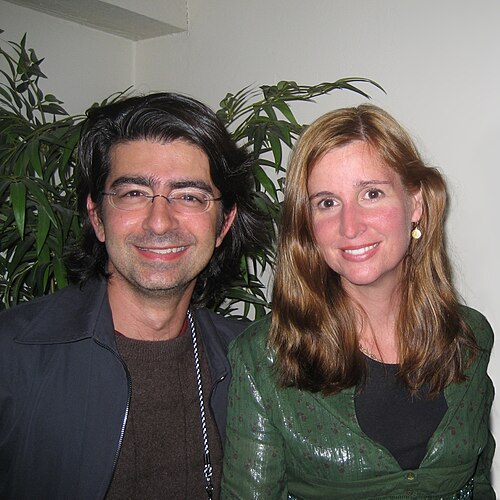
Pierre married Pam Kerr, a biologist-turned-consultant, and they settled in Hawaii with their three children. While most tech billionaires collect toys or rockets, the Omidyars built something different: a philanthropic empire focused on systems change.
After the 1998 IPO, they created the Omidyar Family Foundation, then restructured it in 2004 as Omidyar Network — a hybrid that makes both charitable grants and for-profit impact investments. The approach rejects the traditional divide between “doing good” and “making money.” By 2025, they had committed nearly $2 billion across 700+ organizations in areas like financial inclusion, digital rights, education, and governance. Their philosophy cuts to the core of what they learned from eBay: markets and technology can empower people if designed with the right guardrails.
Their Hawaii connection runs deep. In 2009, they founded Ulupono Initiative to invest in the state’s renewable energy, local food systems, and water management, combining capital with policy advocacy. Omidyar also launched Honolulu Civil Beat, an investigative outlet holding local government accountable through transparency-focused journalism. He’s applying the same principle that made eBay work — transparency builds trust — to civic life.
On a larger scale, his 2013 pledge of up to $250 million created First Look Media and its flagship, The Intercept, backing journalists like Glenn Greenwald and Laura Poitras on national security reporting. Though internal conflicts and leadership departures have complicated the venture, it represents one of the largest philanthropic bets on press freedom in modern history. Through Topic Studios, Omidyar even helped produce Spotlight, which won the 2015 Oscar for Best Picture.
Today, Omidyar remains in Hawaii with Pam, managing roughly $10-11 billion in wealth while continuing their work through Omidyar Network, Ulupono, and Civil Beat. In 2025, TIME named them among the 100 Most Influential People in Philanthropy. He avoids celebrity culture, focusing instead on the mission: using markets, technology, and accountability to expand opportunity.
In an era of billionaire ego projects and personal brands, Omidyar continues working on the problems that interest him, quietly and persistently.
What the Broken Laser Pointer Teaches
Omidyar’s journey offers lessons that cut deeper than the usual “follow your passion” platitudes. First, start simple and test cheaply — AuctionWeb was a weekend project that proved demand before becoming a business. Second, solve the structural problem, not just the surface need: the feedback system addressed trust, the real barrier to online commerce between strangers. Anyone can build an auction site. Omidyar built a trust engine.
Third, narrative matters but honesty matters more — the PEZ myth built buzz, but the truth proved more compelling. There’s something here about how authenticity ultimately wins, even in PR. Finally, success creates obligation: Omidyar could have stopped at billions, but instead built infrastructure for change across journalism, sustainability, and economic inclusion.
The man who sold a broken laser pointer didn’t just create a marketplace. He proved that technology works best when it connects human needs, builds trust between strangers, and opens doors that traditional systems kept locked.
That broken laser pointer collector paid $14.83 for a piece of history — the transaction that proved the internet could be a place where anyone could find their people, no matter how niche their interest. Not PEZ dispensers. Not a romantic gesture. But the belief that somewhere out there, for everything and everyone, there’s a connection waiting to be made. You just need to build the platform and trust people to find each other.
Pierre Omidyar built that platform. And we’re all still using the blueprint.